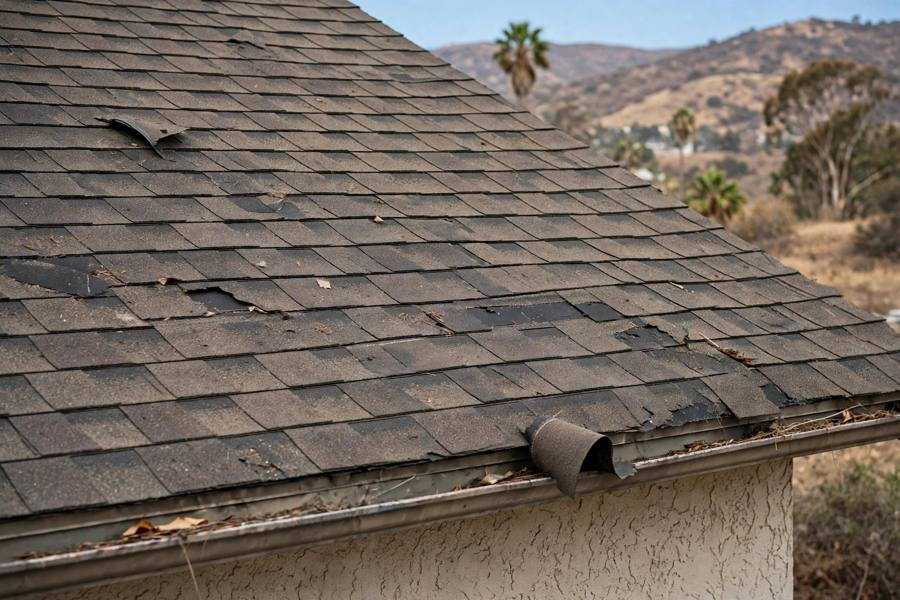
Tile lift-and-relay makes sense when the tiles are still good but the roof underneath them has failed. On Bell Gardens tile roofs, the clay or concrete tiles often outlast the underlayment by decades — so we lift the tiles, replace the failed underlayment and flashing, and lay the same tiles back. You keep the look of the house without paying for new tile.
Tile Lift-and-Relay in Bell Gardens: the local picture
Bell Gardens sits in Los Angeles County with summer attic temperatures that push past 140 degrees and winter rain that finds every failed flashing detail. On a tile roof, that rain usually enters at valleys and walls, not through the field tiles — so we plan lift-and-relay scopes around flashing and underlayment age, not around tile appearance.
What this service covers here: Careful tile lift and on-site storage, so salvaged tiles are not broken in handling; Underlayment replacement across the field, valleys, and penetrations; Flashing replacement at walls, valleys, and penetrations; Broken tile replacement with matching tile where it is available; Tile relay and ridge work, with the roof walked and checked at the end.
Lift-and-relay is the right conversation when the tiles look sound but leaks keep returning, when the underlayment is past 20 years old, when flashing has failed at valleys or walls, or when a tile roof has been patched several times and the patches keep failing because the layer underneath is the problem.
We walk it firstRoof and attic checked before quoting
Photos before coverYou see the bare deck
Sweep every dayNails picked up each afternoon
One crew, one jobSame team start to finish
What our tile lift-and-relay covers
A lift-and-relay rebuilds everything underneath the tile and puts the tile back. Here is what is in the scope, and what we quote separately because not every tile roof needs it.
Tile lift and on-site storage
We lift tiles course by course and stack them on site by slope, so each tile goes back where it came from. Tiles are handled to avoid breakage, because a salvaged tile that survives the lift is a tile you do not have to buy.
Deck inspection and repair
With the tiles and old underlayment off, every sheet of sheathing gets checked for soft spots, delamination, and water staining. We replace what is compromised and photograph the bare deck before new material goes on.
Underlayment replacement
New underlayment goes across the field, with ice and water shield at the eaves, valleys, and around penetrations where the roof system specification calls for it. This is the layer that actually keeps water out — the tiles shed most of it, but the underlayment is the waterproofing.
Flashing and valley work
New flashing at every penetration, wall, and valley, plus new drip edge along the eaves and rakes. Valley and wall flashing failure causes most tile-roof leaks, because water concentrates there in winter rain.
Broken tile replacement
Tiles broken during the lift, or already cracked before we start, are replaced with matching tile where it is available. If an exact match cannot be found, we say so before the relay starts, and place any substitute tile where it is least visible.
Tile relay, ridge, and debris removal
Tiles are relayed in their original courses, ridge tiles reset, and the roof walked and checked at the end. A re-roof may require a City permit, depending on the scope — we confirm the requirement before work begins. Debris is hauled away and a nail magnet sweeper runs across the yard.
Tile homes and mixed roofs.
The approach is the same for a tile home and a mixed roof. What changes is how much tile can be salvaged, and whether the flat or shingle part of the roof needs its own scope.
For tile roofs
We lift and relay clay and concrete tile roofs across Bell Gardens. You get photos of the deck before new underlayment goes on, and a count of broken tiles before the relay starts, so there are no surprises about matching tile.
Leaks under sound-looking tile
Underlayment past 20 years old
Valley or wall flashing failure
For mixed roofs
Many Bell Gardens homes pair a tile front slope with a shingle or flat rear addition. We scope the tile lift-and-relay and the other system separately, so you are not sold a full tile replacement for a roof that is only half tile.
Tile front, shingle or flat rear
One slope leaking, rest sound
Matching tile in short supply
What tile lift-and-relay in Bell Gardens CA actually involves
A plain-language look at what tile lift-and-relay involves and when it is needed.
Tile lift-and-relay in Bell Gardens CA is a rebuild of everything underneath the tile, not a patch over the problem. We lift the tiles, strip the failed underlayment and flashing, repair the deck where needed, install new underlayment and flashing, and relay the same tiles. The house keeps its tile look, and the waterproofing underneath is new.
Bell Gardens tile roofs take the same beating as every roof here — summer heat that pushes attic temperatures past 140 degrees, plus winter rain that finds every failed flashing detail — but tile hides the damage. The tiles look fine from the street while the underlayment underneath has aged out, which is why a tile leak is usually an underlayment leak, not a tile leak.
A roof replacement is a full tear-off and rebuild, not new shingles over old problems.
What it is
A full tear-off of old roofing down to the deck, then a new underlayment, flashing, and finish system.
When you need it
When leaks keep returning after repairs, shingles are missing across slopes, or the roof is past 20 years.
What to expect
Typically three to five working days, any required permit, daily cleanup, photos of the deck, and a final walkthrough.
How our tile lift-and-relay process runs
Five steps from first call to final walkthrough. You will know what is happening on your roof every day we are there.
Inspection and tile count
We walk the roof, check the attic from inside, and photograph every problem area: leaks, valley flashing, broken tiles, soft deck spots. You get a written scope with a tile count — how many tiles are already broken, and how many spares are on site — so matching tile is discussed before the lift starts.
Roof walk
Tile count
Written scope
Lift and storage
Tiles come off course by course and are stacked on site by slope. A lift-and-relay may require a City permit, depending on the scope — we confirm the requirement before work begins. The dumpster is set and the work zone protected before the first tile moves.
Tile lift
On-site storage
Work zone
Deck and underlayment
With the old underlayment stripped, we inspect every sheet of sheathing and replace any that is soft or rotted. New underlayment goes across the field, with ice and water shield at the eaves, valleys, and around penetrations where the roof system specification calls for it.
Deck repair
Underlayment
Flashing
Relay and ridge
Tiles go back in their original courses, with broken tiles replaced by matching tile where available. Ridge tiles are reset, valleys and wall flashing are finished, and the roof is walked to check alignment and coverage before cleanup.
Tile relay
Ridge reset
Alignment check
Cleanup and final walk
We run a nail magnet sweeper across the yard and driveway, haul away every scrap, and walk the finished roof with you. If any tile sits unevenly or any flashing needs attention, it is noted on the final walk.
Haul away
Nail sweep
Final walk
Tools and methods we use on every roof
Move across a circle, or focus it and press Enter, for an illustrative thermal view of the photograph.
Shingle ripper and pry bar
Used to strip old shingles and felt without damaging the deck underneath. The right pry bar saves sheathing that a hammer would split, which keeps deck repair costs down on older Bell Gardens homes.
Roofing nail gun
Drives shingle nails at the correct depth and pattern.
Chalk line and tin snips
Chalk lines keep courses straight on long runs, and tin snips cut flashing and drip edge cleanly. Straight courses are not just cosmetic. They keep the exposure consistent so the shingles seal properly.
Safety harness and roofing ladder
Fall protection on every pitched roof, plus a ladder stabilizer that does not damage the gutters. Our crews are OSHA 10 and OSHA 30 trained, and the harness is not optional on any job.
Nail magnet sweeper
Runs across the yard, driveway, and planting beds at the end of each day to pick up stray nails. It is the difference between a clean property and a flat tire for the neighbor.
Thermal views are illustrative, generated from the photographs.
Methods
Circular saw and power drill
Cutting replacement sheathing to size and fastening it to the framing. We also use the drill for flashing and vent penetrations, which need clean holes to seal properly.
Manufacturer spec installation
Call Zornex Key Roofers to discuss your roof and arrange an inspection.
Ice and water shield at critical zones
We apply ice and water shield at the eaves, valleys, and around penetrations before the synthetic underlayment goes down. These are the spots where wind-driven rain gets underneath shingles, and the membrane is what stops it from reaching the deck.
Deck inspection before cover
Every sheet of sheathing gets walked and checked for soft spots, delamination, and staining before new material goes on. We photograph the deck and send you the images. If we find rot, you see it before we fix it, not after.
Ventilation balance check
Intake at the soffit and exhaust at the ridge need to be balanced, or the attic traps heat and moisture. We check the ratio before installing the new roof, because poor attic ventilation shortens shingle life from the inside out.
Daily site cleanup
Debris goes into the dumpster and a nail magnet sweeper runs across the yard at the end of every workday, not just at the end of the job. It keeps the property usable while we are there and keeps the neighbors on good terms.
When Bell Gardens homeowners choose lift-and-relay
Tiles sound, underlayment failed
A tile roof in the Darwell / Hannon / Gallant / Asmus–Jaboneria Pocket where the tiles are still good but the underlayment underneath has aged out and leaks into a bedroom ceiling.
We lift and salvage the existing clay tiles, replace the failed underlayment and flashing, then reinstall the tiles. This costs far less than a full tile replacement, because the tiles themselves are not bought again.
Outcome: The roof is watertight again without buying new tile, and the salvaged tile keeps the house matching the rest of the block.
Valley flashing failure
A tile home near the Gage Avenue Corridor with leaks at two valleys after winter rain, while the field tiles look untouched.
We lift the tiles around both valleys, replace the valley flashing and underlayment, and relay the same tiles. The rest of the roof is scoped for the same valley detail, since valleys fail together.
Repeated patches, same leak
A tile roof that had been patched three times at the same wall flashing, with the stain returning every winter.
We lifted the tiles at the wall, found the underlayment and step flashing underneath had failed, replaced both, and relayed the tiles. The patch cycle ended because the layer underneath was finally rebuilt.
Broken tiles and a tired underlayment
A concrete tile roof with a scattering of cracked tiles and granule-like debris in the gutters from the underlayment breaking down.
We counted broken tiles before the lift, replaced them with matching tile where available, installed new underlayment across the field, and relayed the roof. The owner got a broken-tile count in writing before any work started.
Outcome: The roof keeps its original tile, the underlayment is new, and the owner knows exactly how many tiles were replaced and where.
Tile front, flat rear
A home with a tile front slope and a flat rear addition, where the tile slope leaks at the wall where the two systems meet.
We lifted the tile at the wall, replaced the flashing and underlayment at the junction, relayed the tile, and scoped the flat addition separately. The junction — where two systems meet — is where mixed-roof leaks usually start.
central Bell Gardens: Older bungalows with steep pitches and small lots. Dumpster placement takes planning because driveways are narrow and shared with neighbors.
Garfield Avenue Corridor: A mix of 1950s ranch homes and newer two-story builds. We see a lot of second-layer roofs here that need a full tear-off before new material goes on.
Darwell / Hannon / Gallant / Asmus–Jaboneria Pocket: Several tile roofs where the tile is still good but the underlayment underneath has aged out. Salvaging the tile saves real money on these jobs.
Florence Avenue Corridor: Duplexes and small multi-family buildings with flat roofs on additions. Ponding water and parapet flashing are the two problems we fix most here.
Suva School Pocket: Quiet residential blocks where neighbors watch the work. Daily cleanup with the nail magnet sweeper matters here, and it has brought us repeat jobs.
Summer attic heat above 140 degrees: Heat breaks down shingle mat from underneath and shortens roof life. We install reflective underlayment and check ridge ventilation on every replacement to reduce attic temperature and take load off your AC.
We walk the roof and attic, then explain what we find.
Drop cloths go down and the work zone gets set up.
We check the finished roof and walk it with you.
From problem to finished result.
IllustrativeThe thermal view is generated from the photograph. It is not a measurement. Drag the handle, or use the arrow keys once it is focused.
Tile underlayment replacement in Bell Gardens
Before: Before: A tile roof in Bell Gardens was leaking into a bedroom ceiling, even though the tiles above looked untouched and the roof had been patched twice at the same wall.
After: After: We lifted the tiles at the wall and across the leaking slope, replaced the failed underlayment and step flashing, and relayed the same tiles. The leak stopped because the layer underneath was rebuilt, not patched again.
Clear the gutters twice a year and check the flashing around the vents each fall. With architectural shingles rated for 30 years, the next replacement is a long way off.
Valley rebuild on a tile roof
Before: Before: A tile home near the Gage Avenue Corridor leaked at two valleys after winter rain, with water staining the ceiling below both valleys.
After: After: We lifted the tiles around both valleys, replaced the valley flashing and underlayment, and relayed the tiles. Both valleys were done together, since valley flashing of the same age fails together.
Walk the roof once a year to check for cracked or shifted tiles and reseal the flashings. Salvaged tile roofs hold up well when the underlayment is sound.
Full underlayment relay, tiles kept
Before: Before: A concrete tile roof in Bell Gardens had an underlayment past 20 years old, with leaks on two slopes and debris from the breaking-down underlayment in the gutters.
After: After: We lifted and stored the tiles by slope, replaced the underlayment across the field, reset the ridge, and relayed the original tiles with matching replacements for the broken ones. The house keeps its tile, and the waterproofing underneath is new.
Check the scupper and drain area before each rainy season and clear any debris. Keeping the drainage path open is what prevents the ponding from coming back.
Roof problems we fix with a tile lift-and-relay
Some tile problems are worth repairing. Others keep coming back because the underlayment or flashing underneath is past its service life. Here is what a lift-and-relay actually solves.
Leaks under sound tileLeaks into ceilings even though the tiles look fineA tile leak is usually an underlayment leak. The tiles shed most rain, but the underlayment is the waterproofing, and once it ages out, water finds the ceiling regardless of how good the tiles look. We rebuild the underlayment and the leak stops.
Valley and wall flashing failureValley and wall flashing failure on tile roofsWater concentrates at valleys and walls in winter rain, so those flashings fail first. We lift the tiles at those details, replace the flashing and underlayment, and relay the tiles — patching the tile surface alone never fixes a flashing failure underneath.
Repeated patches, same stainPatches that keep failing at the same spotEvery patch buys a few months, then the stain returns because the layer underneath was never rebuilt. A lift-and-relay ends the cycle by replacing the underlayment and flashing at the failing detail, not by adding another patch on top.
Broken and slipped tilesBroken, slipped, or missing tiles after wind or foot trafficBroken tiles let water straight onto the underlayment, and slipped tiles expose the layer below to UV. We replace broken tiles with matching tile where available, reset slipped tiles during the relay, and check the underlayment underneath each one.
Underlayment debris in guttersUnderlayment breaking down and shedding into guttersDebris in the gutters from a tile roof is often the underlayment itself breaking apart. That is a sign the waterproofing layer is finished, even if the tiles are intact — and it is the clearest case for a lift-and-relay rather than another repair.
Why homeowners lift and relay instead of replacing
A lift-and-relay keeps the tile, replaces the waterproofing, and resets the clock on the layer that actually fails. Here is what you actually get when we lift, rebuild underneath, and relay.
Keep the tile you already own
New tile is the expensive part of a tile replacement. When the existing tiles are sound, relaying them saves that cost and keeps the house matching the rest of the block, with no new-tile colour mismatch.
New waterproofing underneath
The underlayment and flashing are new, so the roof is watertight again even though the tiles are original. Valleys and walls — the details that actually leak — are rebuilt, not patched.
Broken-tile count in writing
You get a broken-tile count before the relay starts, and matching tile is discussed before work begins. If an exact match cannot be found, you hear it before tiles come off, not after.
Written scope
The written scope describes the work to be done, so you can see exactly what is included: lift, deck repair, underlayment, flashing, relay, and ridge work.
What you receive
Clear records you can keep and share.
Photo report
Images of the bare deck before cover
Written scope
Materials, steps, and firm price
Required inspection paperwork, where applicable
City inspection paperwork on completion
Repair or replace: how to tell the difference
A repair fixes one tile or flashing point. A lift-and-relay rebuilds the underlayment and keeps the tile. A full replacement rebuilds everything, tile included, when the tile or deck is past saving.
Targeted tile repair
One isolated problem on a tile roof with life left
Single missing shingle
One failed flashing point
Under 15 years old
Lift-and-relay
Underlayment rebuilt, original tiles kept
Damage on one slope
Matching material available
Deck mostly sound
Full tile replacement
Whole tile roof torn off and rebuilt from the deck
Leaks on multiple slopes
Past 20 years old
Layered old shingles
Materials and systems we work with
Asphalt shingles
Architectural shingles
Clay tiles
Concrete tiles
Standing seam metal
TPO membrane
EPDM rubber
Modified bitumen
Service ZIP codes.
Bell Gardens, CA 90201. Not listed? Call and ask: it only takes a minute.
Tile lift-and-relay questions we hear on the phone
In a lift-and-relay, your existing tiles are lifted, stored on site, and relayed after new underlayment and flashing go on. In a full replacement, the tiles are removed and new tile is bought. Lift-and-relay costs less when the tiles are sound, because new tile is the expensive part.
Some breakage is expected, and we count broken tiles before the lift starts so matching tile can be discussed in advance. Broken tiles are replaced with matching tile where it is available; if an exact match cannot be found, we say so before the relay starts.
It depends on the roof size and how much tile can be salvaged, and on whether deck repair is needed once the tiles are off. A lifted slope is never left open overnight, and rain delays in winter can extend the schedule — we build a weather backup into the plan.
Our scope covers tile lift and on-site storage, deck inspection and sheathing replacement, new underlayment and flashing, broken-tile replacement with matching tile where available, tile relay and ridge work, and any required City paperwork where applicable.
Get your roof replacement Bell Gardens CA estimate
We walk the roof, photograph the problem areas, and give you a firm number with material options. Call us at (424) 336-0888 and we will schedule a time that works for you.