
For homeowners
We walk your roof, measure every plane, and explain panel options in plain terms. You get a written scope before any work starts.
- Ceiling stains after rain
- Shingles in the yard
- Attic too hot in summer
Metal roofing has a real but narrow place in Bell Gardens. It suits owners who want a long-lived, heat-reflective finish and whose structure and budget fit a metal system. It is not a default recommendation for every small house, and any metal scope here should start with structure, weight and detailing — not with a catalogue profile.
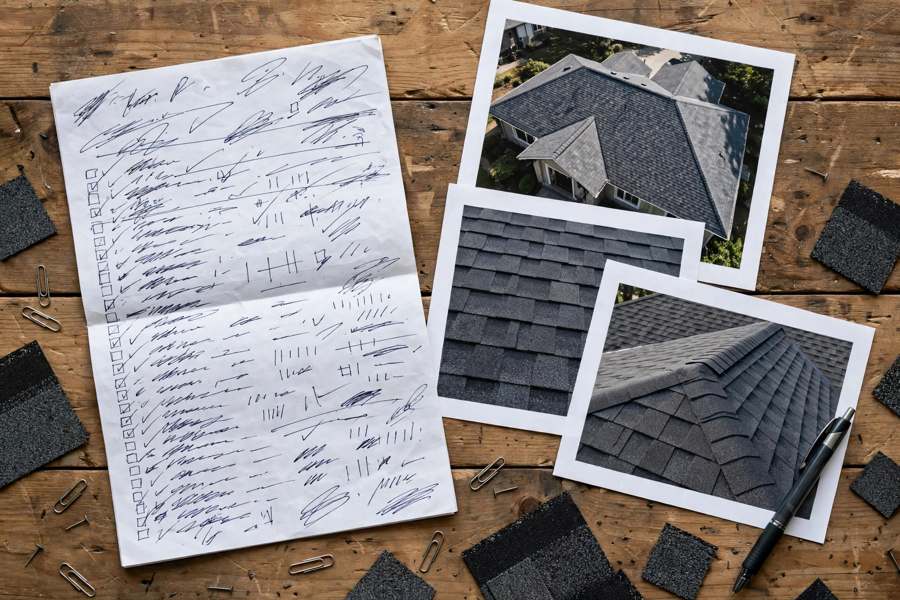 Panel gauge checkFlashing inspectionAttic ventilation
Metal reflects heat well, which matters on a sun-exposed Bell Gardens roof, but its cost and detailing make it a considered choice. A metal roof that is badly flashed at a wall or chimney leaks just like any other roof.
What this service covers here: Standing seam and stone-coated metal installation where appropriate; Metal roof repair for fasteners, seams and flashing failures; Flashing and penetration detailing for metal systems.
Metal is worth discussing for a full replacement where longevity is the priority, for a distinctive finish, and for buildings where the structure supports it. It is not assumed to be right for every house.
Every metal roof we install starts with a full tear-off, deck inspection, and new underlayment. Panel type, gauge, and finish are your choice, and we price each option. Trim, flashing, and ventilation work are part of the scope, not add-ons you discover later.
Old shingles or panels come off, get loaded, and leave the property. We inspect the deck while it is exposed and flag any rot before we cover it. Dumpster placement is coordinated so your driveway stays usable.
Bad sheathing is replaced, then we roll roofing felt and ice and water shield at valleys, eaves, and penetrations. This is the layer that keeps water out if a panel ever lifts. We do not skip it to save a day.
Panels cut to length, set on a chalk line, and locked with concealed clips. Fasteners are specified for the panel and the substrate. We add extra clips at hips, ridges, and perimeter zones for wind uplift.
Drip edge, valleys, pipe boots, wall transitions, and ridge caps, all formed and sealed to spec. Flashing failures cause most metal roof leaks we repair. We build it right the first time.
We look at intake and exhaust while the roof is open. Poor attic ventilation shortens panel finish life and drives up cooling costs. If something is undersized, we tell you and price the fix.
Magnet sweep of the yard and driveway, then a walkthrough with photos of the finished assembly. You get the panel spec sheet and care notes. Final inspection happens before we leave.
The approach is the same for a home and a business. What changes is the access, the schedule and who needs the paperwork.
We walk your roof, measure every plane, and explain panel options in plain terms. You get a written scope before any work starts.
We schedule around your business hours and keep access clear for tenants and deliveries. One crew handles both steep and low-slope sections.
A plain-language look at what Metal Roofing involves and when it is needed.
See how it worksMetal Roofing in Bell Gardens is the installation of interlocking steel or aluminum panels over a prepared deck, fastened through concealed clips or exposed flanges, with underlayment, ice and water shield, drip edge, and flashing detailed at every penetration. Panels arrive cut to length, so there are fewer seams and fewer places for water to find a way in. We set each panel on a chalk line, fasten with a roofing nail gun or clip system, and seal every penetration with a caulking gun rated for the panel finish.
Bell Gardens roofs take a specific beating. Inland sun bakes asphalt shingles until granules wash off, and winter rain finds every lifted nail. That is why so many homeowners here ask about metal roof installation Bell Gardens crews can finish in a few days instead of a week. If your ceiling stains keep coming back after each storm, metal is usually the cheaper answer over the next twenty years.
Metal panels shed water fast and move with heat instead of fighting it.
Five steps, no mystery. You will know what happens each day, who is on your roof, and what it looks like when we leave.
We strip old shingles with a shingle ripper and pry bar, haul everything away, and inspect the deck for rot. Fascia and soffit damage gets flagged before we cover anything. Most homes take one to two days.
We replace bad sheathing, then roll out roofing felt and ice and water shield at valleys, eaves, and penetrations. Drip edge goes on before panels. This is the step that decides whether the roof stays dry for decades.
Panels are set on a chalk line, clipped or fastened, and locked together. We cut with a circular saw or tin snips, never a grinder that throws hot metal shavings onto the finish. Most homes take two to four days.
We run a nail magnet sweeper across the yard and driveway, then walk the roof one more time. You get photos of the finished assembly and a walkthrough of what to watch for. Final inspection happens before we pack up.
Move across a circle, or focus it and press Enter, for an illustrative thermal view of the photograph.
Fastens underlayment and decking quickly and consistently. Depth is set so fasteners do not tear the felt or overdrive into sheathing.
Strips old shingles and lifts nailed sections without destroying the deck. Faster tear-off means less time your home is exposed.
Cuts panels and trim. We use a metal-cutting blade and never a grinder, which would throw hot shavings onto the finish.
Sets the first panel straight. One crooked panel throws off every panel after it, so this step gets checked twice.
Safe access on steep pitches. Harnesses are anchored before anyone steps onto the roof plane.
Thermal views are illustrative, generated from the photographs.
Picks up stray fasteners from the yard, driveway, and planting beds. We run it twice before we leave.
Applies sealant at penetrations and trim joints. We use sealant rated for the panel finish so it does not stain or crack.
Panels are fastened with clips under the seam, so no screws pierce the panel face. The clips allow thermal movement, which is why panels do not back out fasteners in summer heat. This is the standard we install for long-term performance.
Self-adhering membrane goes at valleys, eaves, and around penetrations before panels. If water ever gets past a panel, this layer stops it from reaching the deck. It is the cheapest insurance in the assembly.
Call Zornex Key Roofers to discuss your roof and arrange an inspection.
Intake at the soffit and exhaust at the ridge need to be sized to each other. We check both while the roof is open and correct undersized sections so heat and moisture actually leave.
A 1950s home in Bell Gardens with three layers of shingles and a sagging eave.
We tear off to the deck, replace rotted fascia and sheathing, then install standing seam panels with new drip edge and underlayment. Tear-off and install run about five working days.
Outcome: A lighter roof assembly, corrected eave line, and no more shingle debris in the yard after wind.
A homeowner on Suva Street tired of patching leaks before every winter.
We document the failing flashing and panel laps, then replace the roof with metal panels and rebuilt penetrations. The scope lists every flashing detail so nothing is left to guesswork.
Outcome: A dry ceiling through the rainy season and a service window measured in decades, not years.
A duplex owner along Gage Avenue who wants fewer tenant repair calls.
We install standing seam panels with concealed clips and check attic ventilation on both units. Work is scheduled so tenants keep access to their doors and parking.
Outcome: Fewer maintenance calls, lower cooling demand upstairs, and one roof covering both units.
A home in Bell Gardens with a low-slope back section and steep front.
We install metal panels on the steep front and a membrane system on the low-slope rear, with new flashing tying the two together. Both are priced in one scope.
Outcome: One continuous water-shedding system instead of two problem areas.
A homeowner preparing to sell in the Florence Avenue Corridor.
We inspect, document existing conditions with photos, and install panels where replacement makes financial sense. The report helps the buyer understand what they are getting.
Outcome: A roof that shows well at inspection and removes a common negotiation point.
Bell Gardens sits in Los Angeles County with inland heat, intense UV, and winter rain that arrives in short, heavy bursts. That combination wears asphalt shingles fast and makes metal panels a strong fit. Most homes here were built between the 1940s and 1960s, so we often find two or three shingle layers, dry-rotted fascia, and undersized attic ventilation. We check all three before pricing.
Panel gauge matters here: 24-gauge steel holds up better against thermal expansion than thinner material, and lighter colors stay cooler. If you are comparing metal roofing cost in Bell Gardens CA, remember that tear-off layers and trim complexity usually move the number more than the panel itself.
Standing seam metal roof repair Bell Gardens California calls often trace back to flashing or fastener issues, not the panels. We fix the detail, not the symptom.
Before: A 1950s home near central Bell Gardens had three shingle layers, a leaking valley, and rotted fascia along the back eave. The owner had paid for two repairs in three years and was still finding ceiling stains each winter.
After: We tore off to the deck, replaced 14 feet of fascia and several sheets of sheathing, then installed 24-gauge standing seam panels with new underlayment and flashing. The roof has stayed dry through two rainy seasons.
Clear debris from valleys twice a year and check the pipe boots each fall. A quick visual walk after big storms catches anything loose before it becomes a leak.
Before: A Darwell / Hannon / Gallant / Asmus–Jaboneria Pocket home had an attic that hit 130 degrees in August. The upstairs bedrooms were uncomfortable, and the AC ran almost constantly from June through September. The old shingles were also curling at the south-facing slope.
After: We installed reflective metal panels, corrected an undersized soffit intake, and added ridge exhaust. Attic temperatures dropped noticeably, and the homeowner reported the AC cycling less during peak summer hours.
Keep soffit vents clear of insulation and check ridge vents annually. Replacing the air filter on schedule keeps the whole system working together.
Before: A duplex owner on Gage Avenue was getting two or three repair calls a year, mostly from the same rear slope. Tenants complained about ceiling drips and the owner was losing weekends to patch jobs.
After: We replaced both roof sections with standing seam panels, rebuilt the flashing at the shared wall, and installed new gutters. Repair calls stopped, and the owner now schedules one annual tune-up instead of emergency visits.
Book a yearly tune-up to check fasteners and reseal penetrations. Clean gutters each fall so water does not back up under the panel edge.
Most calls we get start with the same complaints: stains on the ceiling, shingles in the yard, and a repair bill that keeps growing. Metal panels address the cause, not the symptom.
A roof that sheds water and lasts decades
A reflective metal roof can drop attic temperatures noticeably compared with worn asphalt. That means your AC runs less in August. We install panels over proper underlayment so the assembly still vents correctly, and we check attic ventilation while the roof is open.
Concealed-clip standing seam panels resist uplift far better than 3-tab shingles. When a Santa Ana wind event rolls through, you are not chasing missing shingles across the yard. We fasten to code and add extra clips at hips, ridges, and perimeter zones.
Quality standing seam metal panels routinely run 40 to 70 years with basic care. Compare that with architectural shingles at 20 to 30 in full sun. For a Bell Gardens home you plan to keep, the math favors metal even before you count the repaint savings.
Fewer seams, fewer fasteners, fewer failures. We seal every pipe boot, vent, and valley with proper flashing instead of caulk alone. If you have paid for three leak repairs in five years, metal roof replacement Bell Gardens near me searches usually start right after that third invoice.
Clear records you can keep and share.
Panel type, gauge, and trim listed
Deck and finished assembly images
Manufacturer details for your records
Simple maintenance steps for the roof
The two metal roof types behave differently, and the difference shows up years later.
Concealed clips, no screws through the panel face
Screws driven through the panel into the deck
Wavy profile, common on utility buildings
Bell Gardens, CA 90201. Not listed? Call and ask: it only takes a minute.
Based in Bell Gardens. Pick a pocket for local details.
Gauge, panel profile, tear-off layers, and trim complexity move the number most. Standing seam costs more than corrugated.
A quality standing seam metal roof lasts 40 to 70 years here. Inland UV is hard on finishes, so a painted panel may need a recoat around year 25 to 30. Coastal-grade aluminum or Galvalume handles the heat well. Fastener and flashing quality decides whether you get the long end of that range.
We do. Zornex Key Roofers installs standing seam and corrugated metal panels across Bell Gardens, Los Angeles County, and nearby Bell Gardens, CA 90201. Call +14243360888 and we will schedule a roof walk.
Panels shed rain fast, resist wind uplift, and reflect heat that would otherwise cook your attic. They also weigh less than concrete tile, so most existing framing handles them without reinforcement. If your home has a low-slope section, we will tell you where metal works and where a membrane makes more sense.
Other services from the same team.
Written scope, panel spec, and schedule included. No deposit to get the number.
Call us at +14243360888 — we are open 24 hours, every day. Tell us what you are seeing and we will bring the right tools.