
For Homes
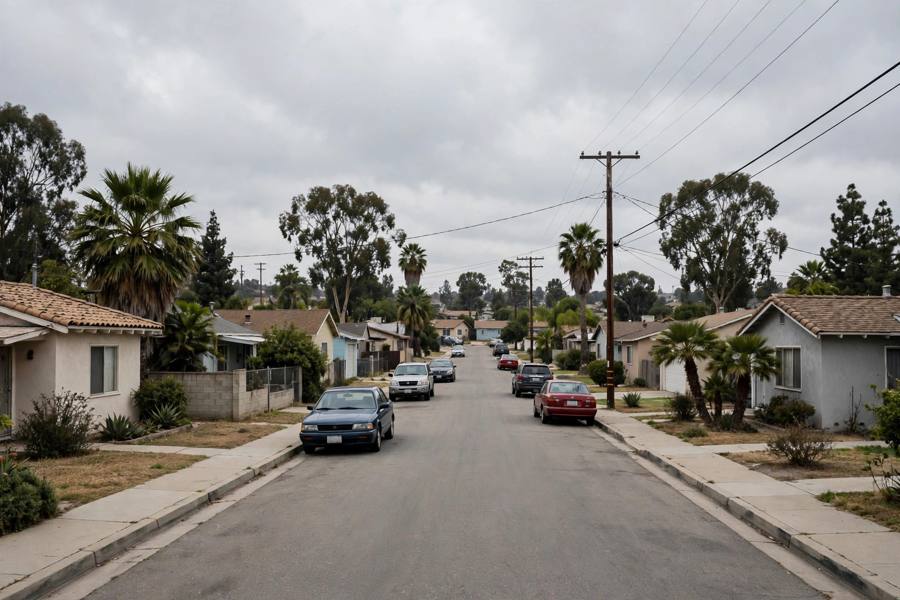
Flat roofs over kitchens, garages, and back additions are common on Bell Gardens homes. We check the deck, the flashing, and the drains before quoting.
- Leak over a back room
- Ponding near the drain
- Old built-up roof cracking
Flat roofs are everywhere in Bell Gardens: over apartment buildings, rear additions, garages and shops. They do not fail the way pitched roofs fail. They pond, their seams open, their drains clog, and water sits until it finds the weakest seam — usually after the first heavy winter rain.
 Deck probedSeams weldedDrains cleared
The classic Bell Gardens parcel is a pitched shingle roof over the main house and a lower-slope roof over a rear addition. Treating only one of them, or detailing them as if they were the same roof, is how a 'new roof' still leaks over the addition.
What this service covers here: Membrane repair and replacement for low-slope roofs; Drainage correction, drain and scupper clearing, and ponding assessment; Seam, flashing and parapet work at walls and edges.
Flat roofing is needed when ponding lasts days after rain, when seams or flashings have opened, when a coating has blistered, or when an addition roof leaks while the main roof stays dry.
Every flat roof job is different, but the core scope is consistent. Here is what you get when Zornex Key Roofers installs or replaces a flat roof in Bell Gardens, and what we quote separately if your roof needs it.
We remove the old membrane, flashing, and any failed underlayment, then haul it all off. The deck gets inspected board by board, and any rotted sheathing is replaced before the new system goes down.
Your choice of 60-mil TPO membrane, EPDM rubber membrane, or two-ply modified bitumen rolls.
New flashing at every wall, curb, vent, and drain, plus drip edge around the perimeter. Ice and water shield goes down at low edges and around penetrations where leaks start most often.
If your roof ponds, we correct the slope with tapered insulation or new crickets so water moves to the drains. Standing water is the fastest way to kill a flat roof in Bell Gardens.
We flood-test low points, hand-check every seam, and run a nail magnet sweeper across the yard and driveway. You get a walkthrough of the finished roof and a rundown of what to check each season.
Before work starts, you get a written scope with photos of every problem area and a fixed price. No surprise line items after tear-off, and no vague verbal estimates.
The approach is the same for a home and a business. What changes is the access, the schedule and who needs the paperwork.
Flat roofs over kitchens, garages, and back additions are common on Bell Gardens homes. We check the deck, the flashing, and the drains before quoting.
Commercial flat roofs carry HVAC units and foot traffic that homes do not. We plan the work around your operating hours and document everything.
A plain-language look at what Flat Roofing involves and when it is needed.
See how it worksFlat Roofing in Bell Gardens is the trade of installing, restoring, or replacing low slope roof systems that shed water at pitches between 1/4:12 and 3:12. It is not the same as shingle work. We tear off old built-up roofing, inspect the deck for soft spots, then lay down roof underlayment, ice and water shield at the edges, and a membrane like TPO membrane or EPDM rubber membrane.
Bell Gardens sits in Los Angeles County, where summer surface temps on a dark flat roof push past 150 degrees and winter rain arrives fast. That swing cracks old modified bitumen rolls and opens seams around vents. If you have ponding water on flat roofs, a ceiling stain in the hallway, or a low slope roof repair Bell Gardens California job that keeps coming back, the fix is a full system, not another tube of roof coating. We see it constantly in the 90201 ZIP, where 1950s and 1960s homes still carry their original low slope sections.
A flat roof is a drainage system first and a covering second.
Every job follows the same five steps, whether it is a 400 square foot garage roof in the Darwell / Hannon / Gallant / Asmus–Jaboneria Pocket or a 10,000 square foot commercial building on Florence Avenue. You know what happens next at each stage.
We strip the old membrane with a shingle ripper and roofing hammer, haul it off, and inspect the deck boards. Rotted sheathing gets replaced. Then we sweep the deck clean with a nail magnet sweeper so no fastener punctures the new membrane from below.
TPO membrane gets mechanically fastened or fully adhered, then heat-welded at every seam. EPDM is glued or ballasted. Modified bitumen rolls are torched down in overlapping plies. We cut material with tin snips and a circular saw, and seal edges with a caulking gun.
This is where most flat roofs fail. We install new flashing at every wall, curb, vent, and drain, plus drip edge along the perimeter. Ice and water shield goes down at the low edges. A chalk line keeps every termination straight and code-correct.
We flood-test the low points, check every seam by hand, and run a final magnet sweep for stray nails. Then we walk the roof with you, show you the drains, and explain what to check each season. The whole job usually runs two to five days.
Move across a circle, or focus it and press Enter, for an illustrative thermal view of the photograph.
Fastens base sheets and insulation boards to the deck quickly and consistently. We adjust pressure per material so fasteners seat without crushing the board.
Strips old membrane and built-up roofing without damaging the deck underneath. Essential on older Bell Gardens roofs where the sheathing is already marginal.
Fuses TPO membrane seams into a single continuous sheet. A properly welded seam is stronger than the membrane itself.
Rolls the yard, driveway, and roof surface at the end of each day to collect stray fasteners before anyone finds them with a tire.
Keeps every membrane cut and termination straight. Clean lines are not cosmetic; they are how flashing seals correctly.
Thermal views are illustrative, generated from the photographs.
Applies sealant at terminations, penetrations, and any detail where membrane meets a different material.
Keeps the crew tied off and stable on low slope roofs, especially at the edges and around skylights.
That means correct fastener patterns, seam spacing, and flashing details, not improvised shortcuts.
After installation, we pond water at the low points and watch for seepage. If anything weeps, we fix it before the job is called complete.
On pre-1978 Bell Gardens homes, we contain dust and debris per EPA rules. This protects your family and keeps the job compliant.
A 1960s Bell Gardens home with an original low slope roof over the back addition is leaking into the laundry room.
We tear off the old built-up roof, inspect and replace any soft deck boards, and install a new 60-mil TPO membrane with corrected slope toward a new drain.
Outcome: The laundry room stays dry through winter rain, and the white membrane drops the back room temperature by 10 to 15 degrees in summer.
A commercial building on Florence Avenue has a flat roof covered in HVAC units and the tenants are complaining about leaks.
We install a two-ply modified bitumen system with walkway pads around the units and new flashing at every curb. Work is scheduled around business hours.
Outcome: Leaks stop, the roof is walkable for future HVAC service, and the property manager has photos documenting the whole installation for the owner.
A duplex in Bell Gardens has ponding water and the owner wants to sell within six months.
We correct the slope, install a reflective roof coating over the sound existing membrane, and provide a written condition report with photos.
Outcome: The roof passes inspection, the report answers buyer questions, and the coating buys five to ten years before a full replacement is needed.
A homeowner in the Suva School Pocket calls after a storm because water is dripping through a kitchen light fixture.
Outcome: The emergency is contained within hours, the permanent repair is done within the week, and the homeowner has photos for an insurance claim if needed.
A small retail building on the Gage Avenue Corridor has a flat roof that is 18 years old and starting to blister.
We cut out the blisters, re-ply the affected areas, and apply a cool-roof coating that meets California reflectivity standards.
Outcome: The roof is watertight again, cooling costs drop slightly, and the owner gets another five to eight years before replacement.
Bell Gardens flat roofing is shaped by two things: heat and old housing stock. Most homes here were built between 1940 and 1970, and many still have their original low slope sections over additions, garages, and back rooms. Summer surface temperatures on a dark membrane regularly exceed 150 degrees, which cooks the oils out of aged modified bitumen and opens seams.
Then winter rain arrives in a few concentrated storms, and any ponding water finds the weak spots fast. We install light-colored TPO membrane or reflective roof coatings to cut that heat load. We also correct slope and clear drains, because a flat roof in Los Angeles County lives or dies by how fast water leaves the surface.
If you are pricing flat roofing cost in Bell Gardens CA, the age and condition of the deck usually matters more than the square footage.
Before: A 1,100 square foot home near Clara Street had three active leaks and a ceiling stain in the hallway. The original built-up roof was brittle, and two deck boards were soft around the drain.
After: We replaced the two deck boards, installed 60-mil white TPO membrane with corrected slope, and flood-tested the low point. The hallway ceiling stayed dry through the following winter.
Clear the drain twice a year and check the seams each fall. A TPO roof in this climate should give 20 to 30 years with basic care.
Before: An 8,000 square foot commercial building had ponding water near two HVAC units and blistered modified bitumen across the field. Tenants had reported drips twice that year.
After: We cut out the blisters, re-ply the affected areas, corrected the slope around the units, and applied a reflective roof coating. No leaks were reported the following season.
Schedule an annual inspection before winter and keep the drains clear. The coating should add five to eight years before full replacement.
Before: A homeowner called at 7 a.m. after water came through a kitchen light fixture. The vent flashing had pulled loose in a windstorm, and rain was running straight into the attic.
After: We tarped the roof by 11 a.m., then returned two days later to replace the flashing and re-seal the surrounding membrane. The kitchen ceiling was repaired by the homeowner's painter.
Check vent flashing after any high-wind event and re-seal if it lifts. A five-minute look can prevent another interior repair.
Most flat roof calls we get in Bell Gardens fall into a handful of categories. Here is what we see, what happens if you ignore it, and how we fix it.
A dry ceiling, a cooler building, and a roof you can maintain.
We slope the new membrane toward the drains, weld every seam, and flood-test before we leave. A properly installed TPO membrane holds water where it belongs, outside the building, not in your drywall.
A white TPO membrane reflects sunlight instead of soaking it up. On a 1,200 square foot Bell Gardens home, that can drop attic temperatures by 15 to 25 degrees on a July afternoon. Your air conditioner runs less, and the roof deck itself lasts longer because it is not baking all day.
Unlike shingles, a flat roof lets us get to the HVAC unit, the swamp cooler, or the plumbing vent without pulling up material. That matters when you need flat roofing services Bell Gardens CA 90201 on short notice. We can inspect, patch, and re-seal a penetration in under an hour.
A 60-mil TPO or 90-mil EPDM system installed over a sound deck typically runs 20 to 30 years in this climate. Modified bitumen gives you 15 to 20.
Clear records you can keep and share.
Before, during, and after images of the roof.
What is included and what the price covers.
Membrane type, thickness, and flashing details.
Where water flows and what to keep clear.
The membrane you choose changes lifespan, reflectivity, and repair method. Slope and drainage decide how long any of them last.
White, heat-welded single-ply membrane.
Black rubber single-ply membrane.
Torch-down asphalt plies.
Bell Gardens, CA 90201. Not listed? Call and ask: it only takes a minute.
Based in Bell Gardens. Pick a pocket for local details.
TPO and EPDM sit at the higher end; modified bitumen is usually the most affordable full replacement. We give you a fixed written price after inspection, so you are not guessing.
It handles the heat swings in Los Angeles County without the seam cracking you get from older modified bitumen. EPDM rubber membrane is a close second if you want maximum UV resistance and do not mind a darker surface. On commercial buildings, we often recommend a two-ply modified bitumen system with a reflective roof coating on top.
Zornex Key Roofers installs flat roofs across Bell Gardens and the surrounding Los Angeles County area, in Bell Gardens, CA 90201.
A properly installed TPO or EPDM flat roof lasts 20 to 30 years in Bell Gardens. Modified bitumen typically gives you 15 to 20 years. The biggest lifespan killers here are ponding water, clogged drains, and foot traffic from HVAC service. If you clear the drains twice a year and keep the membrane free of standing water, you will get the full life out of the system.
Other services from the same team.
October is the right month to fix a flat roof before winter rain arrives. Call Zornex Key Roofers at +1 (424) 336-0888 and we will inspect your roof, show you the photos, and give you a fixed written price.
Call us at +14243360888 — we are open 24 hours, every day. Tell us what you are seeing and we will bring the right tools.